If you’ve been comparing hardwood floors online for more than twenty minutes, you’ve already noticed that maple and oak dominate almost every category page. Both are genuine hardwoods — denser than pine or fir, sourced from deciduous trees — and both are widely available in engineered format, meaning a real-wood veneer top layer bonded to a plywood core for improved moisture resistance and dimensional stability. Both species sit comfortably in the $3–8 per square foot range for mid-grade engineered planks. So far, so similar. The problem is that they behave very differently once you get them into a real room, under real light, with real foot traffic and a real finish applied on top. If you’re mid-spec on a renovation right now and trying to decide between the two, this article gives you the tradeoff map — no cheerleading for either species, just the practical decision rules.
The Core Difference Nobody Warns You About: Grain, Color, and Stainability
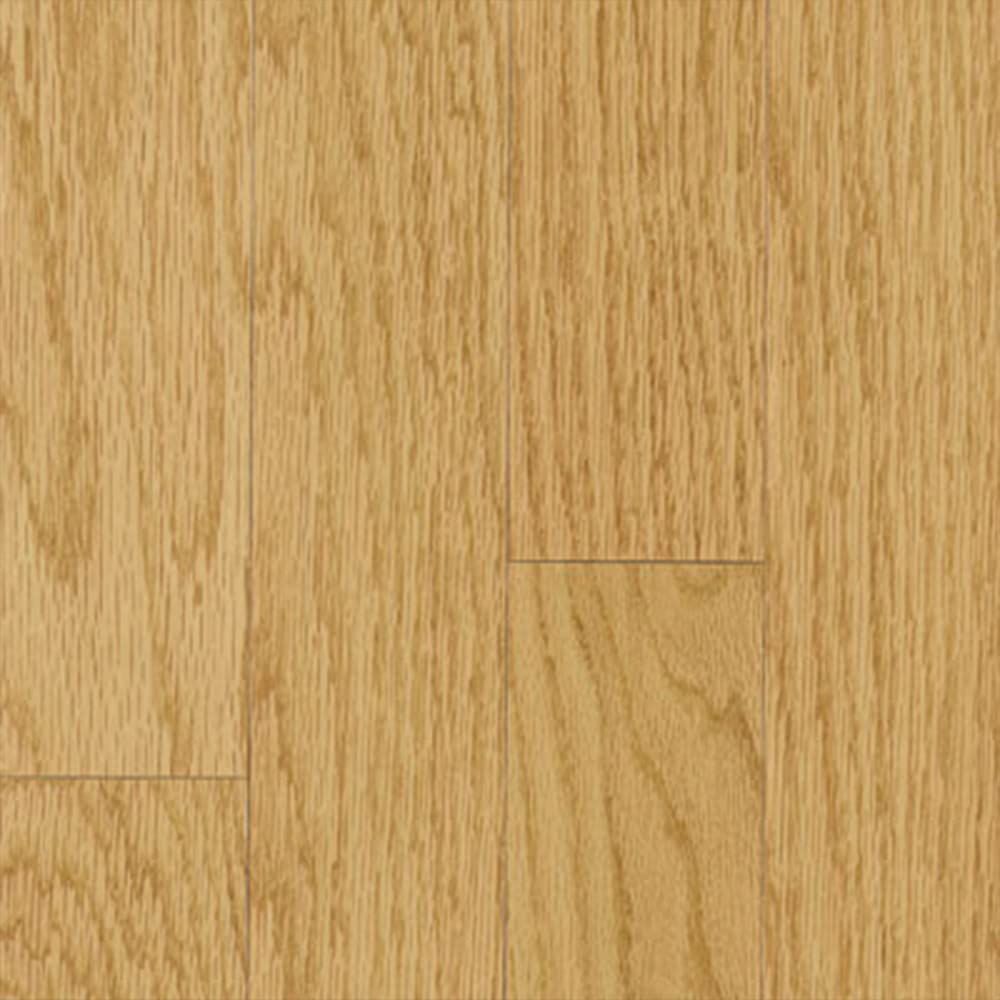
Oak’s visual character comes from its pronounced, open grain. Run your finger across an unfinished white oak plank and you can literally feel the troughs. That texture is your biggest ally when it comes to staining: the grain channels accept pigment consistently, which is why almost any stain color — from pale Scandinavian blonde to deep espresso — lands predictably on oak. Fine Homebuilding’s hardwood species selection archive consistently lists this stain predictability as oak’s single most practical advantage for renovators working with a specific color target.
Maple is the opposite. It has a tight, almost featureless closed grain that looks beautiful in natural light — clean, creamy, and close to architectural. But that same tightness makes it notoriously resistant to liquid stain penetration. The finish sits on top rather than soaking in, creating blotchy, uneven color distribution that even experienced finishers struggle to control. The National Wood Flooring Association’s Wood Species Guide (NWFA, woodfloors.org) explicitly identifies maple as a “difficult-to-stain species” and recommends gel stains or tinted hardeners whenever any significant color shift is desired. If your design plan involves staining the floor anything other than a very light natural tone, this is not a minor asterisk — it is a practical deal-breaker for maple.
The honest rule: If you want to stain the floor, choose oak. If you love the natural wood tone and intend to finish clear or with a very light hardener, maple earns its place.
Hardness, Durability, and the Janka Number You Keep Seeing
Budget-Tier Species Performance
At the entry price point ($3–6 per square foot), oak dominates both SKU availability and finish variety. Red oak has historically been the most widely distributed species at this tier, and its Janka hardness rating of 1,290 lbf — per the Wood Database species comparison reference — is more than adequate for most residential applications. At this price tier, red oak’s main advantage over maple is that it accepts stain reliably and is forgiving to install on a compressed schedule. Maple at this price point is harder to find in a quality engineered format, and the limited finish options tend toward glossier polyurethane coatings that amplify the UV-yellowing risk discussed later in this article.
 product image](/images/external/5e38bfcbdcd1.jpg)
Mohawk
$20.08
In stock on Amazon
Check price on AmazonMid-Tier Species Performance
In the $6–12 per square foot range — encompassing brands like Lauzon’s core engineered lines and comparable mid-market offerings — the competition between maple and oak becomes genuinely interesting. Hard maple (Acer saccharum) carries a Janka rating of 1,450 lbf, compared to white oak (Quercus alba) at 1,360 lbf, per the Wood Database species comparison reference. That 7–12% hardness advantage matters most in high-traffic corridors, open-plan kitchens, and mudrooms where chair legs and dog nails are constant variables. Bob Vila’s 2025 engineered hardwood flooring buyer’s guide notes that maple’s density makes it a strong performer in active households but flags its refinishing difficulty as a long-term tradeoff.
At this tier, white oak’s finish technology has also advanced meaningfully: wire-brushed, fumed, and matte UV-oil finishes are now widely available and address many of the grain-telegraphing and color-shift concerns that made white oak feel riskier in earlier product generations. This Old House’s 2025 engineered hardwood buyer’s guide highlights white oak as the most versatile species at the mid-tier price point for exactly this reason — broad aesthetic range, reliable stain uptake, and solid refinishability over a 20-year floor lifecycle.
 product image](/images/external/db76690d8077.jpg)
Shaw
$110.44
In stock on Amazon
Check price on AmazonPremium-Tier Species Performance
At $12 per square foot and above — wide-plank engineered and custom-milled solid installations — the species decision becomes as much aesthetic as technical. At this tier, hard maple in 5”–7” plank widths reads as a design material in the same register as furniture-grade cabinetry. Architectural Digest’s hardwood flooring overview (architecturaldigest.com, 2024) positions wide-plank maple specifically within contemporary and Japandi-influenced interiors, where its grain restraint and pale, even tone complement minimalist palettes in a way that oak’s more active figure cannot replicate.
White oak at the premium tier is equally well-served: custom fuming, reactive staining, and hand-scraped surface treatments are all more achievable on oak than on maple because of the open-grain stain acceptance described earlier. Buyers at this tier are typically working with an interior designer who has already locked the palette — the maple vs. oak decision was resolved three mood boards ago. The relevant question at $12-plus is finish system and plank width, not species durability.
Mullican
$175.18
In stock on Amazon
Check price on AmazonUV Yellowing: Maple’s Most Under-Discussed Weakness
This is the one that surprises renovators most after installation. Both maple and oak amber over time under UV exposure — it is a natural photochemical process in the wood — but maple does it faster and more dramatically. Hard maple is particularly prone to UV-induced yellowing, which is why many manufacturer SKUs ship maple with aluminum oxide UV-inhibiting finish systems rather than standard polyurethane. The National Wood Flooring Association’s Wood Species Guide (NWFA, woodfloors.org) addresses this phenomenon in its species-specific installation notes and recommends UV-inhibiting finishes for maple installations in rooms with significant direct sunlight exposure.
What this looks like in practice: move a couch after three years on a maple floor and you will often see a distinct color contrast between the protected zone and the exposed zone. On white oak with a wire-brushed or fumed finish, that differential is usually far less pronounced, because the initial color shift happens quickly and then plateaus. Apartment Therapy’s flooring coverage has flagged this as a common complaint among maple floor owners in sun-exposed urban apartments — and it is one of the few post-purchase regrets that is genuinely difficult to reverse without a full refinish.
Design-context decision rule:
- Rooms with significant south- or west-facing window exposure → white oak holds color better and carries lower long-term risk
- Rooms with controlled light (north-facing, window treatments consistently in use, interior spaces) → maple’s UV risk is manageable and its clean aesthetic is worth it
- Radiant-heated slabs → both species perform well in engineered format, but maple’s tighter grain requires more precise acclimation per NWFA installation protocols (woodfloors.org, Wood Species Guide)
Installation and Subfloor Considerations
Both species are available in engineered format, which means both can go over radiant heat and in below-grade applications that solid wood cannot tolerate. But there are species-specific nuances worth knowing before you commit.
Maple is dimensionally stable when properly acclimated, but it is more sensitive to moisture swings than oak because of its tight cell structure. The NWFA Wood Species Guide recommends a minimum 72-hour acclimation period for engineered maple in the installation environment before floating or gluing down. Skipping this step is the single most commonly reported cause of gapping complaints in maple floor reviews on Houzz. Oak is more tolerant of shorter acclimation windows, which matters on a compressed construction schedule.
On subfloor flatness: both species hold to the same industry standard — 3/16-inch variation over a 10-foot span for most engineered floating installations — but maple’s lighter, more uniform color makes subfloor telegraphing more visible. Where oak’s grain texture and warmer finish tones absorb minor surface irregularities, maple’s pale, even surface shows them. If your subfloor is older concrete or a plywood deck with significant variation, oak is the more forgiving species from a prep standpoint.
Fine Homebuilding’s hardwood species archive notes that this subfloor sensitivity is one reason commercial installers in contemporary residential projects often spec white oak even when the client’s original mood board featured maple — the risk of a callback is simply lower.
The Decision Frame: If X, Then Y
If you have read this far, you are probably close to a decision. Here is the condensed version organized by the factors that actually move the needle.
Choose engineered maple if:
- Your finish plan is natural, light, or clear — you are letting the wood be the wood
- The room has controlled light exposure or you are specifying a UV-inhibiting finish system from the outset
- You want a cleaner, more contemporary aesthetic with less visual grain movement
- Hardness matters above other factors (high-traffic open plan, active household with pets)
- You are in the mid-to-premium tier and can access a manufacturer with strong finish technology
Choose engineered white oak if:
- Any staining is part of the plan — even a medium-tone stain
- You want maximum refinishability over a 20-plus-year floor lifecycle
- The room has significant south- or west-facing light exposure
- You are in the $3–6 entry tier and need the widest SKU and finish selection
- Your design direction is warmer, more traditional, Craftsman-influenced, or European farmhouse
The swing case: Contemporary interiors with light palettes and controlled light conditions are genuinely 50/50 between the two species, and that is where physical samples matter most. The difference between maple and white oak in a clear matte finish is subtle in a photograph and obvious in your actual room at 4pm on a winter afternoon. Order samples before committing — both Bob Vila’s buyer’s guide (bobvila.com, 2025) and This Old House’s engineered hardwood review (thisoldhouse.com, 2025) recommend in-room sample testing as a non-negotiable step before any species decision is finalized.
The species decision is one of maybe four or five choices that will visually define a room for the next fifteen years. Maple and oak are both excellent materials — the right answer depends entirely on your finish plan, your light conditions, and what your design is trying to say. Neither species forgives a mismatched finish, and the Janka hardness difference between them, while real, is unlikely to be the deciding factor in most residential applications. Use the decision rules above, pull physical samples from a reputable mid-tier manufacturer before you lock the spec, and trust the math more than the showroom lighting.