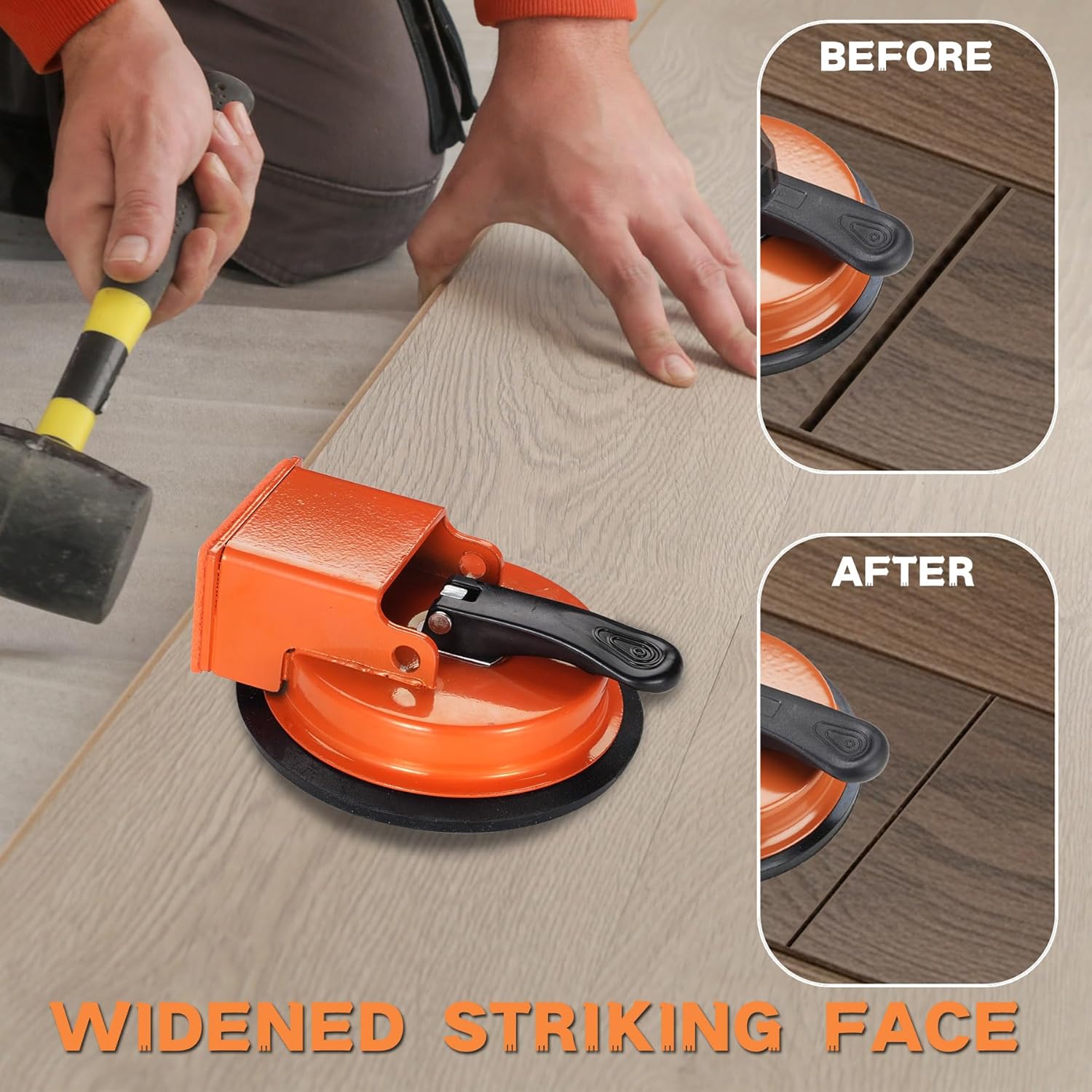
You finished the install, the floors looked immaculate, and then winter hit — and suddenly there are thin dark lines running between your boards where there weren’t any before. Or maybe you bought a house where the gaps have been there for years, and nobody seems to agree on whether they’re a problem. Gaps in hardwood floors are one of the most common concerns homeowners bring to flooring forums, and they cause genuine confusion because the same visual symptom can mean a dozen different things — some totally normal, some worth fixing, and a handful that are signs of a deeper issue you really don’t want to ignore.
This article is for readers who are past the “what is a hardwood floor?” stage. You already have boards down, or you’re managing a property where they’re down, and you need to make an actual call: leave it, fill it, or pull someone in. We’ll walk through what actually causes gaps, how to distinguish a cosmetic gap from a structural one, and which repair tools and materials are worth your money at each level of severity.
Why Gaps Happen: The Real Mechanics
Wood is hygroscopic — it absorbs and releases moisture from the surrounding air. As humidity rises, the wood fibers swell; as humidity drops (winter heating season is the main culprit), the boards shrink across their width and pull apart slightly from each other. This is normal wood behavior. A floor that gaps a little in February and closes back up by April is doing exactly what it was designed to do.
The National Wood Flooring Association’s guidance on wood floor movement makes this explicit: seasonal gapping of up to 1/8 inch in individual boards is within acceptable performance range for most solid hardwood species, and maple in particular — being a denser, harder species than oak — can be less forgiving of humidity swings precisely because it moves quickly and in a relatively narrow range.
What separates normal seasonal movement from a repair situation comes down to three variables:
1. Gap size and permanence. A gap that opens in winter and fully closes by early summer is seasonal. A gap that is present year-round and doesn’t close is structural — either the boards weren’t properly acclimated before installation, there’s a moisture intrusion issue below the floor, or the floor has simply aged past the point where the boards retain their original dimension.
2. Subfloor integrity. Fine Homebuilding’s coverage of wood floor movement points out that a soft or uneven subfloor — one with flex or with areas of delamination in the plywood — will cause boards above it to move laterally over time, creating gaps that aren’t about humidity at all. If you can feel a slight bounce or hear a squeak near the gap, probe deeper before reaching for filler.
3. Original installation quality. Boards that weren’t fully nailed or stapled down, that weren’t acclimated to the site’s humidity before installation, or that were installed during an atypically dry or humid season will gap in ways that seasonal movement alone doesn’t fully explain.
Reading the Gap: A Quick Diagnostic Framework
Before you buy anything, spend five minutes with a flashlight and a flexible putty knife doing a physical read of your gaps. Here’s how to triage:
Narrow and even (under 3mm, running consistently between boards): Almost certainly seasonal. Document with a photo in winter and check again in late spring. If the gap has closed or is significantly reduced, no intervention needed — or at most, a flexible rope-type filler if the winter appearance bothers you.
Wide but isolated (one or two boards, gap over 4–5mm): Points to a localized installation problem, a board that wasn’t properly seated, or a cupped board that’s lost its edge contact. This is the most repairable category with the right filler product.
Wide and progressive (multiple boards, gap increasing over time, or boards showing slight lifting at edges): This is the red-flag category. Per the NWFA’s gapping and cupping guidance, progressive gapping combined with edge lift (called “cupping”) points to a moisture imbalance — usually moisture coming from below, especially in slab-on-grade or crawlspace installs. No filler product addresses the underlying cause. Get a moisture meter on the subfloor before doing anything else.
By the numbers — Gap Size Quick Reference:
| Gap Width | Likely Cause | Recommended Action |
|---|---|---|
| Under 2mm (about 1/16”) | Normal seasonal movement | Monitor; no fill needed |
| 2–4mm (1/16”–5/32”) | Seasonal or mild acclimation issue | Flexible rope caulk or wood filler |
| 4–6mm (5/32”–1/4”) | Acclimation failure or isolated board issue | Color-matched rope filler or splining |
| Over 6mm (1/4”+) | Structural / moisture problem | Investigate subfloor; consult pro |
The Right Tools and Materials by Gap Severity
This is where most guides go wrong: they recommend a single product type as if all gaps are the same problem. They’re not. Here’s how to match the tool to the situation.
Flexible Rope Filler (Seasonal Gaps, Under 4mm)
For gaps that are real and cosmetically annoying but are still moving with the seasons, a rigid filler is the wrong answer. It will compress when the boards close in summer and then crack or pop out by the following winter. The solution here is rope caulk or a specifically formulated flexible floor gap filler — these are braided or extruded fillers that compress and expand with board movement.
This Old House’s gap-repair coverage recommends flexible fillers explicitly for seasonal situations, noting that rigid wood fillers used in moving gaps will “telegraph” cracks back to the surface within a season or two. Reviewers of rope-style fillers across flooring forums consistently note that color matching is the main challenge — most brands offer a limited palette, so ordering a sample before committing to a full tube run is worth the extra week.
The application process is straightforward: the rope is pressed into the gap with a putty knife or a dedicated gap-rolling tool (some installers use a wallboard knife angled at about 45 degrees), trimmed flush, and left without sanding. No finish coat is needed for most products.
Two-Part Epoxy or Latex Wood Filler (Permanent Gaps, 3–6mm)
For gaps that aren’t closing seasonally and are stable in size, a color-matched wood filler — either a water-based latex product mixed with sanding dust from the floor itself, or a pre-tinted two-part product — gives a more durable, flush result. Bob Vila’s roundup of floor gap fillers notes that the dust-and-glue method (mixing fine sanding dust from the floor with a clear wood glue or latex filler) produces the most natural color match because it’s using the actual pigment of the existing boards.
The tradeoff: this method works best on floors that are going to be sanded and refinished afterward, because the mixed filler needs to be sanded flush and will take the same stain or finish coat as the surrounding wood. If you’re filling without refinishing, a pre-tinted latex product is more practical.
For maple specifically — which the Spruce’s hardwood gap guide notes is prone to blotchy, inconsistent coloration — matching a filler product exactly to the surrounding boards is genuinely difficult. This is an honest limitation of the species. If your maple floor has significant character variation or was left natural, test the filler in an inconspicuous area (inside a closet, under a threshold) before doing a visible run.
Splining (Wide Gaps, 5mm+, Non-Structural)
For gaps that are too wide to fill cosmetically — where filler would be obvious and structurally unreliable — the professional approach is to install a wood spline: a thin strip of matching wood species glued into the gap to restore full-width contact between boards. This requires routing the gap edges clean and straight (a router with a straight-cut bit and a fence guide), then planing the spline to exact thickness.
This is the approach Fine Homebuilding recommends for wide-gap repairs in solid hardwood, particularly on older floors where the original boards have lost significant dimension through multiple refinishing cycles. It’s labor-intensive — realistic time is 30–45 minutes per gap including setup — and requires router competency to execute cleanly. For a homeowner with basic tool experience, it’s achievable on isolated gaps. For a floor with recurring wide gaps across multiple runs, bringing in a flooring contractor is usually more cost-effective per-foot than the time investment.
When Nothing in This List Applies: Subfloor and Moisture Work
If your diagnostic read points to moisture intrusion or subfloor failure, the repair tools above are all cosmetic Band-Aids on a structural problem. The right tool in that situation is a moisture meter — a pin-type or pinless meter capable of reading both the hardwood surface and the subfloor below. The NWFA’s installation guidelines specify that solid hardwood should be installed at moisture content within 4 percentage points of the subfloor reading. A gap between boards accompanied by readings that diverge by 8–10 points means the floor and subfloor are not in equilibrium, and no filler holds until that’s corrected.
Making the Call: The Decision Rule
Here’s the clean version for anyone who needs a fast answer before a contractor walks through the door:
If the gap closes seasonally and is under 3mm: Leave it. This is normal wood behavior. Control your interior humidity (35–55% RH year-round is the NWFA’s recommended range) and reassess in year two.
If the gap is stable and under 5mm on a floor you’re not refinishing: Flexible rope filler for seasonal-adjacent gaps, pre-tinted latex filler for fully stable ones. Budget $15–30 in materials for a typical room run.
If the gap is stable and under 5mm on a floor that’s getting refinished anyway: Dust-and-glue or two-part epoxy filler, sanded flush before the finish coat. This is the highest-quality cosmetic result.
If the gap is over 5mm, stable, and isolated: Consider splining. If you’re comfortable with a router, the materials cost is low ($20–40 in spline stock). If not, budget one to two hours of flooring contractor time per affected area.
If the gap is widening, accompanied by cupping, squeaking, or bouncing subfloor: Stop. Put a moisture meter on it before any filler goes down. You may be looking at a subfloor repair or a crawlspace moisture remediation job, and that conversation needs to happen first.
The gap in your floor is usually telling you something specific. Reading it correctly before reaching for a product is the whole skill — and it’s one that saves most homeowners at least one wasted repair attempt.
Ready to compare filler products side by side? Use the comparison tool on Maplewoodflooring.com to filter by gap width, finish type, and species — or order samples before committing to a full floor run.